Description
The Scanlon Creek Nature Centre (SCNC) is located on the lands of Treaty 18, also known as the Lake Simcoe–Nottawasaga Treaty, signed in 1818 between the Crown and the Chippewa Nation — the present-day Chippewas of Rama First Nation, Chippewas of Beausoleil First Nation, and the Chippewas of Georgina Island. This land, negotiated as part of 1.59 million acres of Chippewa territory, reminds us that we are all Treaty people with shared responsibilities to care for it.
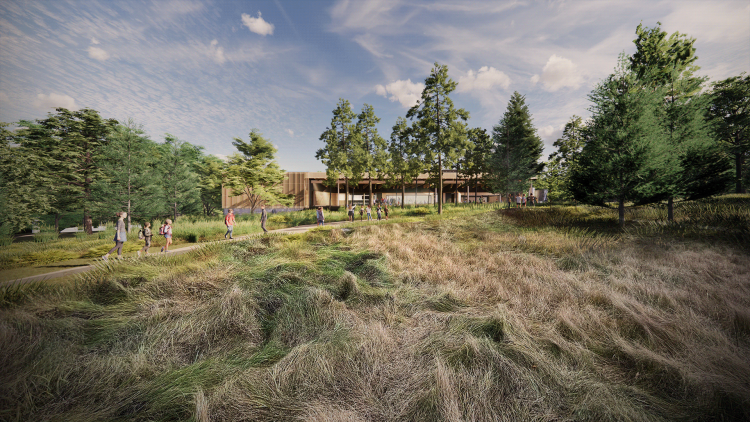
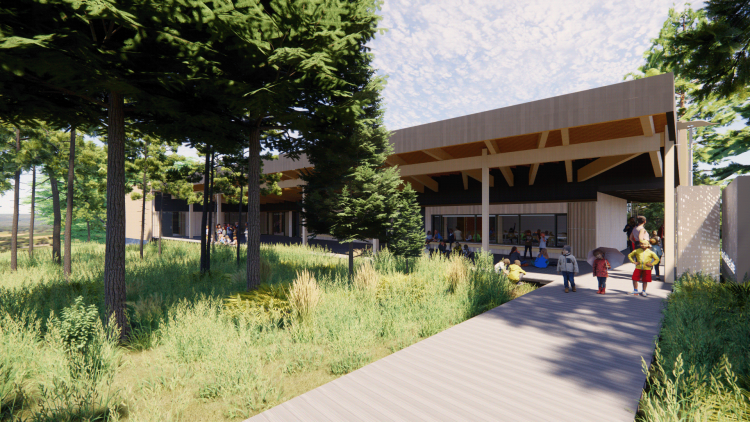
The Scanlon Creek Nature Centre is a new community hub that invites people of all ages and abilities from the Lake Simcoe watershed and beyond to foster a connection to and understanding of nature. Located in the Scanlon Creek Conservation Area in Ontario and strategically placed in the path of hiking trails, this education-focused project is an experiential hub for connecting better with nature. The primary goal of the project is to create a gathering and learning space where visitors can participate in programs and services that enhance their knowledge, awareness, and understanding of environmental health. In response, the design solution transforms the building into a teaching tool — one that tells the story of the land and the Indigenous history upon which it sits.
The Nature Centre attracts 15,000 kids, students, seniors, and community members of all ages each year to experience and learn about nature. It is an hour’s drive from the Greater Toronto Area, and may be the first point of contact with ‘real’ nature for many urban children. The Centre serves as their introduction to the natural environment. A four-season facility, school buses of students flow through the site yearly. These field trips to the woods are memorable experiences that will stay with them for the rest of their lives.
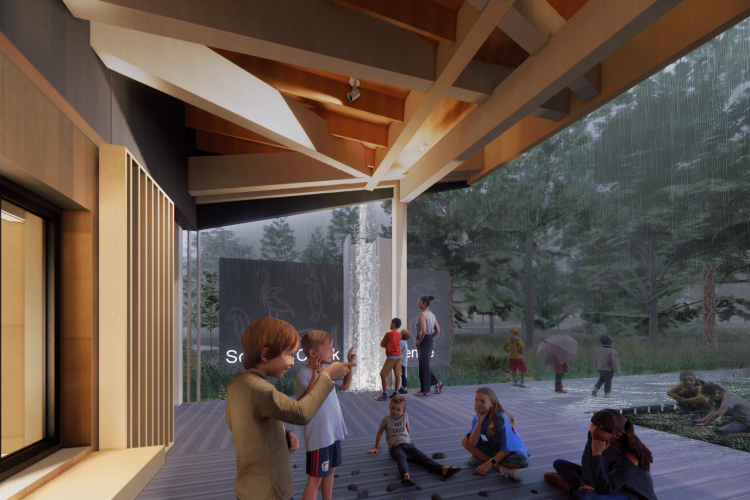
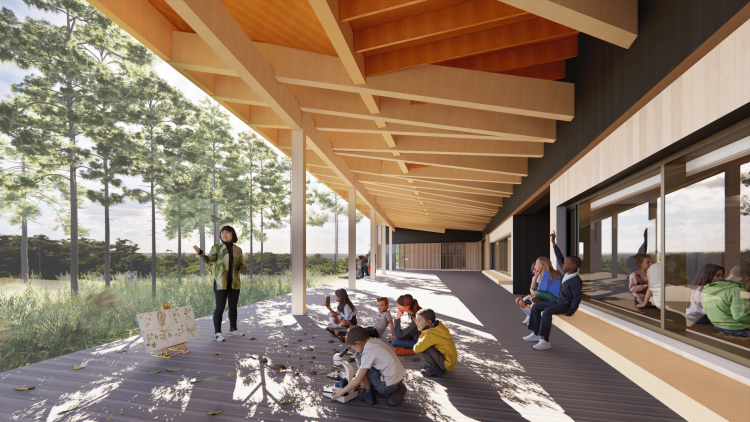
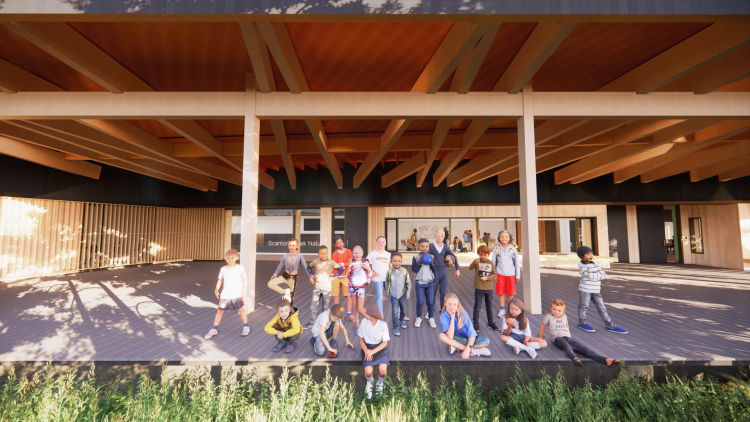
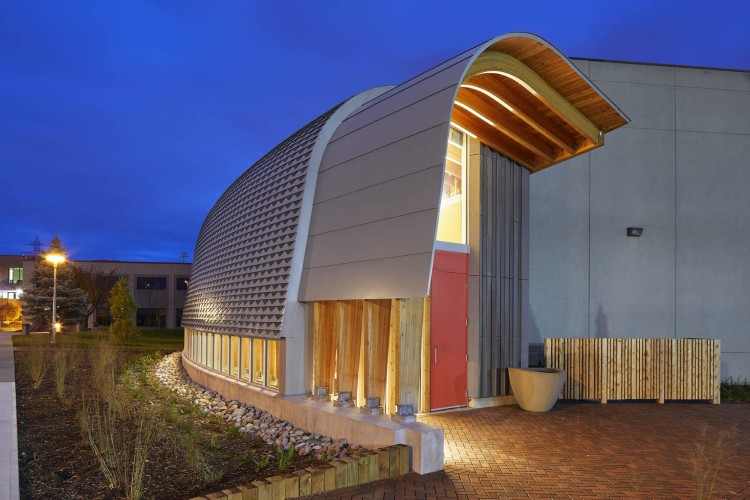
In the new Nature Centre, every feature has a dedicated teaching purpose: embedded green infrastructure to rein-force the reciprocal relationship between the natural and built environments; exterior concrete walls with graphic etchings that will imprint Indigenous history onto the building to tell the story of harvesting, voyaging and trading and the symbiotic relationship with the land; the thoughtfully-designed entrance signage with etchings of Indigenous clans and a map of the Treaties territories to contextualise the important geography; the centralised collection of rain water into a single rainscreen that pours back to the waterways on the site, highlighting the importance of water in the area; the interior programming designed to be outward-looking in which teaching spaces have visual connections to the surrounding forests; the large, canopied porch, not only invites passing hikers in to rest but is the perfect spot for sun-filled outdoor lessons.